



Bridging Asia's Islands: Taizhou Changlong's Next-Generation RoPax Ferry Engineering
-
 2026-07-01
 -
 100
100
How a Chinese private shipyard became a specialist builder for Southeast Asian coastal transport, one RINA-certified vessel at a time
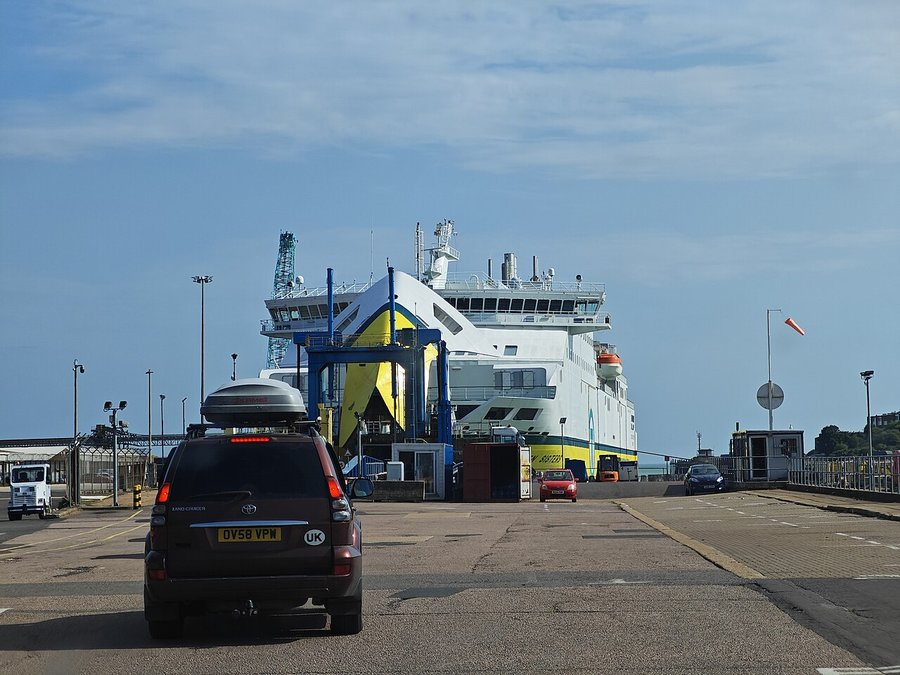
Source: Wikimedia Commons. RoPax (Roll-on/Roll-off Passenger) ferries such as those built for Hong Kong and Singapore clients are engineered for the demanding pace of Asian coastal and island networks.
Across Southeast Asia and the East China Sea, the geography is dominated by water. Indonesia alone sits on more than seventeen thousand islands, the Philippines adds another seven thousand, and Malaysia's eastern corridor stretches into the South China Sea. Connecting these communities to trade, healthcare, education, and tourism depends on a fleet of ferries that carry passengers, cars, and small commercial vehicles at speed, in safety, and at predictable cost. RoPax ferries — short for Roll-on/Roll-off Passenger — have become the workhorses of these networks. Taizhou Changlong Shipbuilding has positioned itself as a specialist builder in this category, delivering RINA-certified, Asian-ready ferries from its Wenling yard to shipowners in Hong Kong, Singapore, and beyond.
A hybrid-propulsion answer to IMO pressure
The new ferry class launched by the yard is engineered around an LNG-electric hybrid power system co-developed with Chinese clean-energy partners. As the International Maritime Organization tightens emissions rules across more vessel categories, hybrid propulsion has moved from a niche experiment to a credible deliverable. Engineering analysis indicates the configuration reduces carbon emissions by around 25 percent compared with a conventionally powered ferry of the same size, while battery storage allows zero-emission, near-silent maneuvering during port approaches and docking. That capability is more than an environmental talking point — it directly affects the license to operate in coastal communities that are sensitive to noise and air quality, which is the daily reality of short-sea routes in tropical Asia.
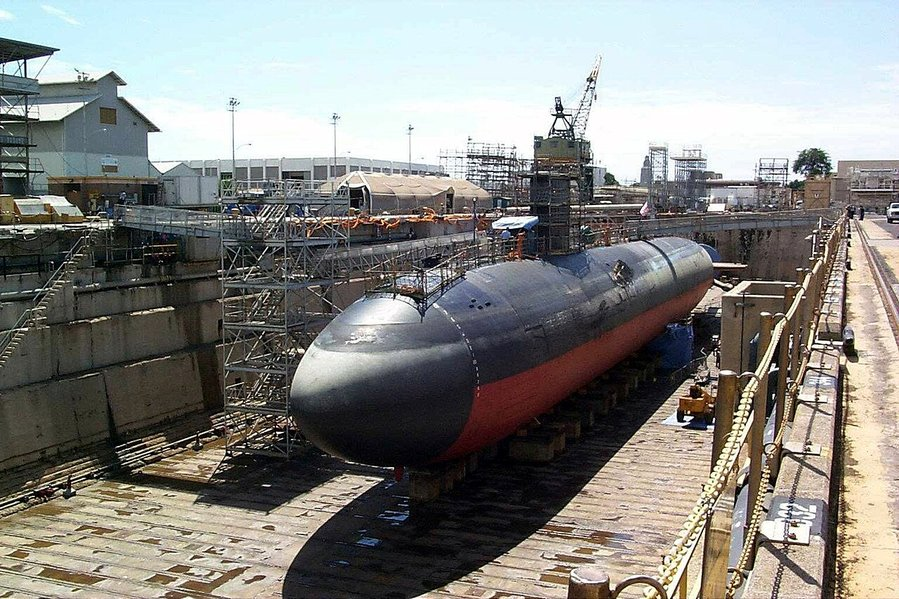
Source: Wikimedia Commons. RINA-classed vessels follow strict structural and safety audits; every weld and hull plate must trace back to approved drawings and certified materials.
Logistics tuned for archipelago routes
Logistically, the vessel type balances three constraints that often pull against each other: passenger capacity, vehicle deck area, and maneuverability in shallow or congested port approaches. Recent yard deliveries at 75 meters LOA with a 16-meter beam and 6-meter depth have shown that a single platform can comfortably carry 400 passengers, host a double-deck vehicle bay for cars and light trucks, and still hold the responsiveness needed for daily calls at smaller island terminals. The yard's hull design has been measured to reduce wave resistance by roughly 15 percent compared with conventional forms, which lowers fuel burn at the 18-knot cruising speed that high-utilization routes actually run. Shipowners operating volatile oil-price exposure value that margin directly.
Built for tropical marine environments
Tropical service imposes its own engineering rules. Warm, high-salinity water accelerates corrosion; warm air stresses air-conditioning and refrigeration; humid decks demand non-slip surfaces; and tropical storms demand collision avoidance. Each yard delivery is built with corrosion-resistant hull plating, specialized antifouling coatings, and tropicalized fire-suppression systems that exceed the baseline standards. Navigation aids, redundant bridge systems, and emergency response equipment are configured for congested waterways such as the Malacca and Sulu Seas. Crew welfare is treated as part of vessel availability: ergonomic quarters with integrated laundry and refrigeration units reduce fatigue on long runs, which translates into fewer operational incidents for the owner.
Passenger comfort as commercial strategy
RoPax economics depend as much on the travelling public as on freight. Air-conditioned cabins with noise-dampened insulation, panoramic lounges for coastal sightseeing, dedicated entertainment systems, and accessible public spaces lift the journey above a utilitarian transit. Across Southeast Asian ferry corridors, that uplift is increasingly tied to tourism revenue, with operators positioning their vessels as part of the regional travel experience rather than as a last-mile utility. By offering both the steel and the interior concept, the yard helps owners shorten the timeline from contract signing to first revenue sailing without compromising on classification compliance.
Why the model is hard to copy
What makes a private Chinese yard viable in this international category is not headline price alone. It is the combination of three decades of hull-building experience, a design team comfortable with hybrid propulsion, and a working relationship with classification societies that demands rigor on every weld and plate. For shipowners who must run week-long schedules through tropical waters with hundreds of passengers on board, the assurance of a yard that already has multiple RINA-certified ferries in service in their region is worth more than the lowest quote. That is the niche Taizhou Changlong has chosen, and the next-generation ferry design is its most visible statement of intent.
From bespoke delivery to long-term partnership
Beyond a single newbuilding, the deeper shift is that ferry programs are increasingly built on long-term cooperation rather than one-off contracts. Owners come back with route-specific requests — additional vehicle deck capacity for an island chain that has just opened a tourism season, or upgraded collision-avoidance radars for a new stretch of congested waterway — and the yard responds with a configuration adapted to that operating profile. This repeated, iterative engineering is what makes a modern RoPax feel less like a generic ferry and more like a tailored marine transport solution. For regional operators planning growth over the next decade, that partnership model is often more valuable than a cheaper newbuilding from a yard that walks away after delivery.
— Industry Analysis, sourced from tzclcy.com/news (2026)


关注微信公众号
