



Smart Shipyards, Smarter Ships: Inside Taizhou Changlong's Manufacturing Upgrade
-
 2026-07-01
 -
 100
100
A multimillion-dollar investment in robotic welding, digital inspection, and worker safety is reshaping the production floor of a Zhejiang shipyard
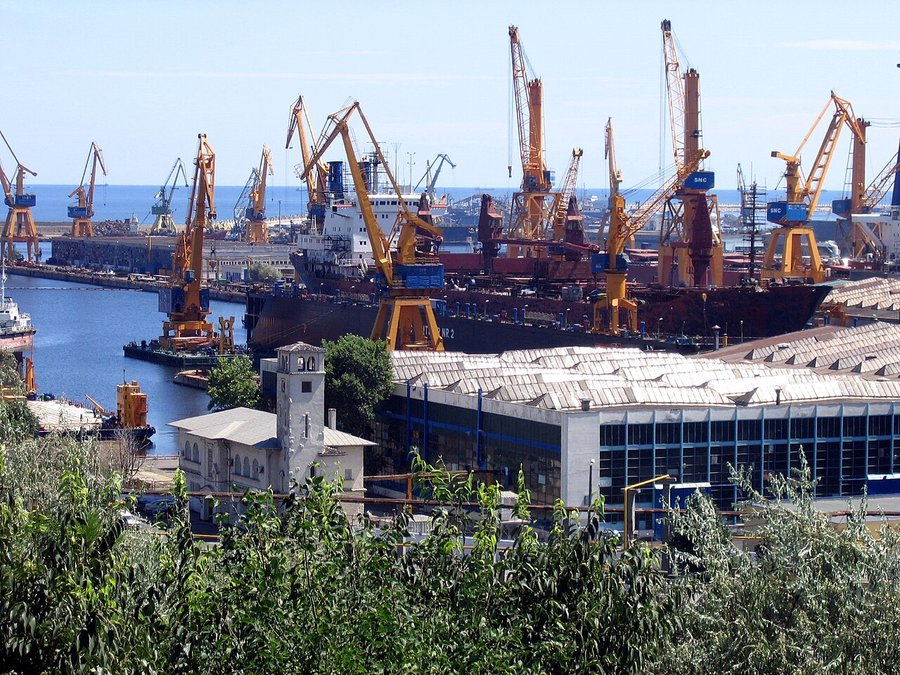
Source: Wikimedia Commons. A modern shipyard floor is increasingly organized around automated steel processing, robotic welding, and digital inspection — investments that change both the economics and the quality of new vessels.
In global shipbuilding, the difference between a competitive yard and a struggling one is no longer only steel price or labor cost. It is the production system that sits behind the hull. Taizhou Changlong Shipbuilding Industry Co., Ltd., a private Zhejiang shipyard with deep roots in the regional maritime supply chain, has announced a comprehensive upgrade of its manufacturing facilities, introducing a new suite of state-of-the-art equipment across its primary assembly lines. The investment is positioned by the company not as a routine refresh, but as a strategic move designed to lift quality, shorten delivery timelines, and strengthen competitiveness in an industry where expectations keep rising.
Robotic welding that raises the floor and the ceiling
Among the most visible additions is a state-of-the-art automated welding system. Traditional shipbuilding relies heavily on manual welding, which — while skilled — is time-consuming and subject to human fatigue. The new robotic system integrates high-accuracy sensors, machine vision, and real-time monitoring. Each weld is checked against international classification standards before the next pass is made. The benefit is twofold: the structural integrity of the vessel increases, and the time required to reach a stable, inspection-ready hull block shrinks. A stronger weld backbone also extends the operational life of the vessel at sea, which is an under-appreciated form of sustainability because it delays the moment a ship is scrapped and replaced.
Source: Wikimedia Commons. Automated welding systems combine sensor feedback, machine vision, and real-time monitoring to reduce variability and improve throughput on large hull blocks.
Digital inspection and materials management
Upgrades to the inspection chain are equally significant. New non-destructive testing equipment, structured around digital radiography, phased-array ultrasonic testing, and 3D laser scanning, allows the yard to capture, store, and trace every critical joint in a way that previously required expensive third-party visits. When a surveyor from a classification society arrives, the data package is already prepared, which compresses approval cycles and reduces disputes over visible defects. A connected materials management system supports the same workflow. Steel plates, sections, and pre-fabricated units are tagged at intake, traced through fabrication, and matched to the digital twin of the vessel under construction.
Worker safety and shop-floor ergonomics
Beyond throughput and quality, the upgrade programme takes worker safety seriously. Manual shipbuilding exposes welders, fitters, and riggers to heat, fumes, heavy lifting, and unstable scaffolded positions. The new layout repositions much of the heavy work into mechanized stations with overhead cranes and ergonomic platforms. Local exhaust ventilation is integrated into the robotic welding bays, and confined-space entry is governed by digital permits rather than paper sign-offs. For an industry struggling to attract younger talent, a safer and more modern shop floor is a quiet but genuine competitive advantage.
What the investment signals to shipowners
For shipowners evaluating a private yard for a newbuild order, capability on the production floor is now as visible as capability on the drawing board. A yard that invests in robotics, digital inspection, and integrated materials management is easier to audit, easier to schedule, and easier to defend to a classification society. That matters in markets such as RINA-classed ferries, Lloyd-classed bulk carriers, and hybrid-powered offshore vessels, where the production record is part of the sales pitch. By upgrading its equipment stack, the yard is signalling that it intends to compete on cycle time, weld quality, and lifetime vessel performance — not only on price.
Source: Wikimedia Commons. The same data and welding standards used on newbuild blocks feed directly into repair and dry-dock work, where traceability and quality are equally important to classification surveyors.
Repair, retrofit, and a sustainable service backlog
The equipment upgrade also expands the yard's repair and retrofit capacity — a fast-growing slice of revenue across Chinese shipyards as the global fleet ages and emission-control rules force existing vessels to install scrubbers, ballast-water systems, or hybrid retrofit packages. Automated welding and digital inspection shorten dry-dock time, while standardized work packages allow the yard to quote competitively on retrofits at scale. For owners managing older tonnage, that translates into shorter off-hire windows and more predictable budgets. Combined with a stronger newbuild pipeline, this positions the yard as a full-cycle partner rather than a single-purpose builder. The investment, in other words, is less about chasing the largest possible hull and more about being the yard that owners call first when a complex ship needs work.
— Industry Analysis, sourced from tzclcy.com/news (2026)
Quick Reference: Taizhou Changlong Shipbuilding at a Glance
Headquarters: Tianxi Center, Songmen Town, Wenling City, Taizhou, Zhejiang Province, China. Core categories: bulk carriers, container ships, fishing vessels, RoPax ferries, oil tankers, deck barges. Notable recognitions: RINA-classed newbuilds delivered to shipowners in Hong Kong and Singapore. Service areas: newbuild, repair, retrofit, and class-survey support.


关注微信公众号
