



The Feeder Comeback: Right-Sizing Container Tonnage for Regional Trade
-
 2026-09-07
 -
 49
49
Ultra-large container vessels take the headlines. The ships that actually keep regional supply chains moving are smaller, busier and far less forgiving of a specification that was written for the wrong route.
Carrier networks have reorganised around a hub-and-spoke logic in which the biggest hulls work a handful of deep-water terminals and everything else is moved by feeder tonnage. That second leg is where the constraints live: shallow drafts, short berths, older crane outreach, bridge air-draft limits, and cargo that must arrive on a schedule set by someone else. Taizhou Changlong Shipbuilding Industry Co., Ltd., whose portfolio covers container vessels from feeder size upward, treats this segment as a design problem in its own right rather than as a scaled-down version of a bigger ship.
Why the largest ship is not the right ship
A very large container vessel earns its economics only when cargo consolidates efficiently and the terminal can absorb the exchange. Where either condition fails, the advantage erodes quickly. Every box that must be transshipped adds a lift, a yard move and a scheduling dependency. The feeder absorbs that complexity, which means its specification should be derived from the ports it will call at rather than from a fleet standard.
That reversal of logic changes the questions asked at the design stage. Instead of maximising nominal intake, the useful exercise is to map the intended rotation and test the hull against it: draft at the shallowest berth, length against the tightest turning basin, hatch arrangement against the crane outreach actually available, and air draft against every bridge on the approach.
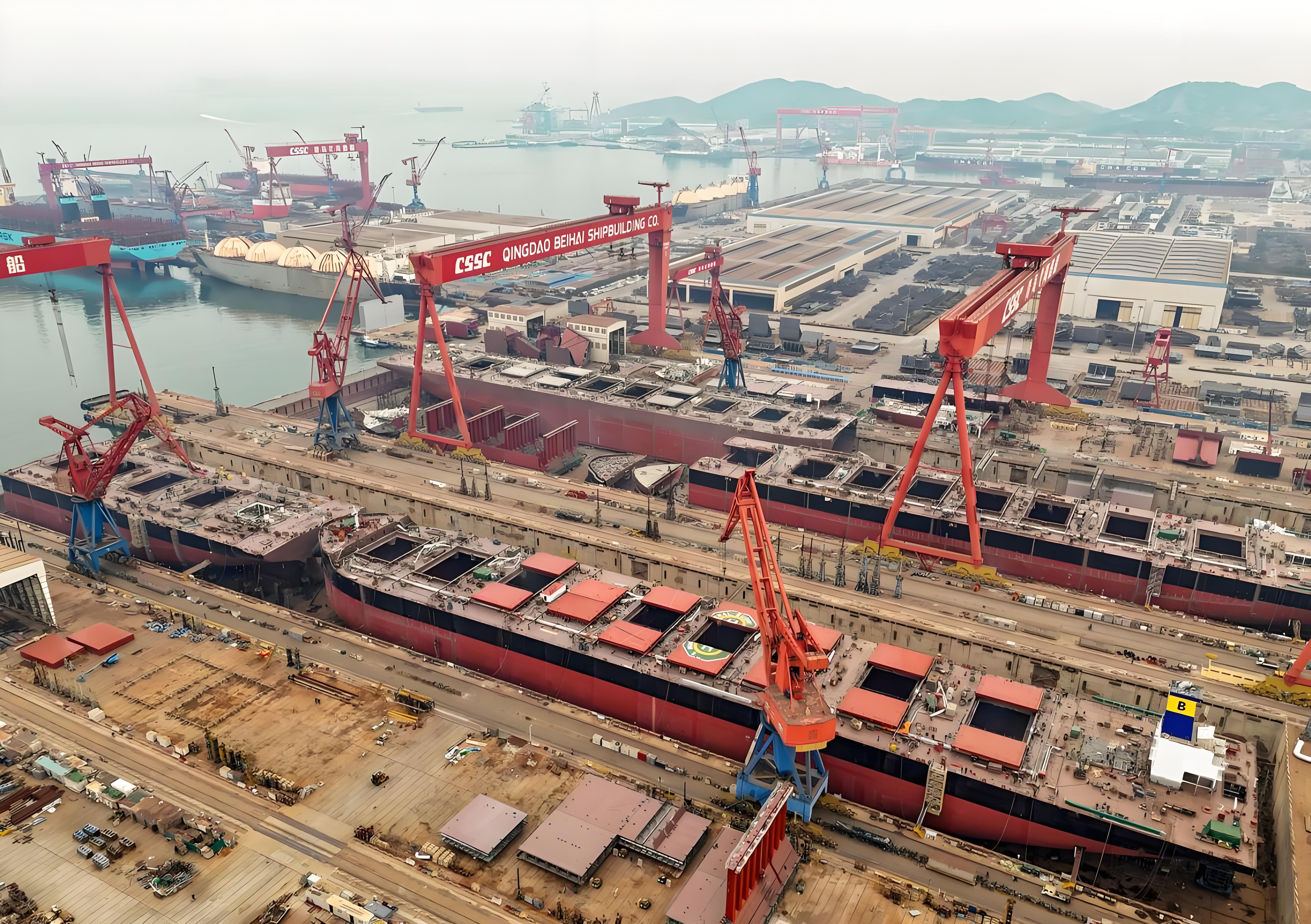
Source: Wikimedia Commons, Niels Johannes, 2020 (CC BY-SA 4.0). Modern feeder tonnage is specified around real rotations, real berths and real crane outreach.
Efficiency where the margins are thinnest
Feeder trades run on thin margins and frequent port calls. A hull optimised for a single design speed in open water is often operating well away from that condition for most of its working life. CFD-led hull refinement aimed at the speeds the vessel will genuinely hold - including partial-load and ballast conditions between calls - tends to deliver more real fuel saving than a headline figure quoted at full load.
Energy-saving devices follow the same reasoning. Pre-swirl stators, rudder bulbs and propeller boss cap fins are most effective when selected with the operating profile in mind and integrated at the design stage rather than added later. Because the carbon-intensity regime rates vessels on performance per transport work, the design decisions that improve a feeder's rating are also the ones that protect its charterability.
Shore-power and hybrid readiness are moving from novelty to expectation on regional trades, particularly where port authorities have introduced incentives or local air-quality rules. Even where a vessel does not initially carry battery capacity, reserving space, cooling and switchboard margin for a later installation protects the asset against a regulatory change that is easier to predict than to time.
Sized for the port, priced for the charterer
Practical details decide whether a feeder is easy to employ. Hatch cover configuration and stack loads determine what mix of laden, empty and high-cube boxes can be carried. Reefer capacity and the number of plugs determine whether the ship can compete for perishable cargoes. Hold ventilation, container lashing systems and hold geometry all matter to a charterer's acceptance process, and each is far cheaper to resolve on the drawing board than after delivery.
There is also a balance to be struck between specification and flexibility. A vessel configured so tightly around one trade that no alternative charterer can use it has traded employability for a marginal efficiency gain. Owners building series vessels usually want a platform that can be re-let across several regional rotations with minimal modification.
Maintenance access deserves a mention of its own. Feeders spend a larger share of their working life alongside than deep-sea tonnage, and the components that wear - hatch cover seals, lashing gear, mooring equipment, deck coatings - are the ones crews see every day. Layout decisions that make those items easy to inspect and replace reduce the small defects that accumulate between dry-dockings, and in a competitive charter market presentation still influences employment.
What a diversified builder brings
Feeder design benefits from experience that has nothing to do with containers. Structural optimisation work carried out on bulk carriers sharpens the approach to hold geometry and steel weight. Systems-integration discipline developed on tankers and RoPax newbuilds improves the coordination of power generation, refrigeration and deck services. A production system already running robotic welding and digital inspection produces the same quality evidence for a small hull as for a large one.
At Changlong that transfer is deliberate. The yard's order book spans bulk carriers, product tankers, RoPax ferries, fishing vessels, patrol craft, deck barges and engineering vessels alongside container tonnage, and the engineering team is organised so that lessons travel between segments rather than staying with one product line.
Where the segment goes next
Regional trade is not a temporary pattern. Manufacturing capacity continues to relocate within Asia, near-shoring is creating new short-sea routes, and infrastructure investment across Southeast Asia and Africa is opening ports that were previously too small for mainstream services. Feeder tonnage serves those routes, and the vessels that serve them best will be the ones specified for the ports rather than for the press release.
For owners weighing a newbuild in this size range, the practical guidance is unglamorous: start from the rotation, insist on hull optimisation against the real operating profile, and choose a yard that can demonstrate class relationships and after-delivery support. Price is the entry ticket, not the decision.
Quick Reference
• Define the vessel from the rotation: draft, length overall, air draft, crane outreach and berth length at the intended ports.
• Optimise the hull for the operating profile, not the design speed alone.
• Integrate energy-saving devices at design stage: pre-swirl stator, rudder bulb, propeller boss cap fin.
• Specify hatch covers, stack loads, reefer plugs and lashing systems with charterer acceptance in mind.
• Preserve employability: avoid configuring the ship so tightly that only one charterer can use it.
• Verify class relationships, production traceability and after-sales support before signing.
— Industry Analysis, prepared for Taizhou Changlong Shipbuilding, 2026.


关注微信公众号
