



From Launch Ceremony to Handover: What Sea Trials Really Prove in 2026
-
 2026-11-11
-
 2
Ribbons, balloons and a bottle against the bow make a memorable photograph. A ship launching ceremony is a genuine milestone — the hull is structurally complete, watertight and ready to enter the water — but it is not a delivery. Between that day and the handover of the vessel lies the phase in which newbuild projects are most often won or lost: outfitting, commissioning, dock trials, sea trials, class close-out and the document pack.
For owners placing their first order at a Chinese private shipyard, understanding that sequence is the single most useful preparation they can make. This guide explains what each stage proves, what the owner's site team should insist on, and why the paperwork at handover is as valuable as the vessel itself.
(Industry reference image. The vessel shown is not a Changlong build.)
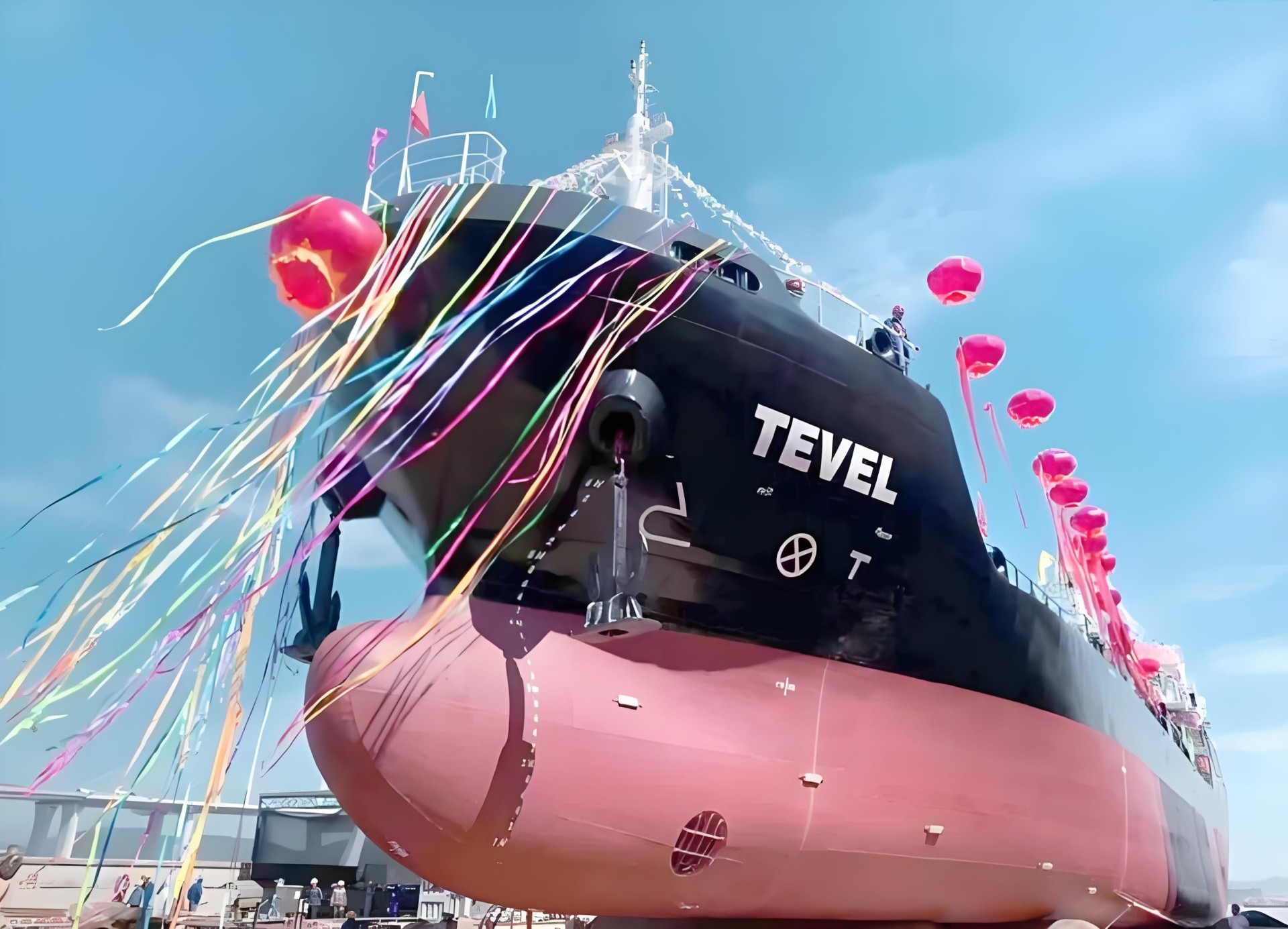
1. What a ship launching ceremony actually confirms
A launch confirms that the hull envelope is closed, the shell is watertight, coatings are applied below the waterline and the vessel can safely be floated. It does not confirm that the main engine is commissioned, that cargo systems work, that the automation has been tested, or that the vessel can achieve its contractual speed.
That distinction matters because the period after launching is where most schedule pressure lands. Outfitting quay space, late equipment deliveries, commissioning faults and punch-list items compete for the same weeks. A yard that has planned the post-launch programme in detail will hold its delivery date; one that treats the launch as the finish line will not.
2. The critical path from launch to handover
Outfitting and completion. Accommodation, piping, cabling, machinery installation, cargo systems, navigation equipment and painting. Long-lead items that arrive late show up here.
Dock trials and quay trials. Systems are energised and tested alongside: generators, switchboard, pumps, ballast system, steering gear, winches, cargo gear load tests, fire and safety systems, alarms and automation. Defects found here are cheaper than defects found at sea.
Inclining experiment and stability documentation. The lightweight and centre of gravity are established, and the approved stability information is issued.
Sea trials. The vessel proceeds to a trials area with the yard's trials team, class surveyor and owner's representatives aboard. The agreed trials programme is executed item by item.
Class close-out and certification. Outstanding survey items are closed, statutory certificates are issued, and the vessel is entered into class records.
Handover. The punch list is agreed, documents and spares are transferred, the protocol of delivery is signed, and the crew takes over.
3. What sea trials are designed to prove
A trials programme is not a demonstration; it is a set of measurements against the contract specification.
Speed and power. Measured on a properly run course, corrected for wind, current and sea state, at the agreed draft and displacement. The speed–power curve should match the figure used in the EEXI calculation.
Manoeuvring. Turning circles, stopping distance, crash astern, steering gear performance and low-speed handling.
Anchoring and mooring. Anchor windlass, brake holding power, chain deployment and mooring equipment under load.
Machinery. Main engine load points, auxiliary generators, shaft generator, fuel changeover, lubrication, cooling, exhaust emissions equipment and blackout recovery.
Environmental systems. Ballast water treatment, exhaust gas cleaning or SCR where fitted, oily water separator, sewage treatment and any shore-power connection.
Cargo systems. Hatch covers, hold ventilation, deck cranes with load tests, reefer circuits, tank cleaning and pumping systems as applicable.
Habitability and safety. Vibration and noise in accommodation, emergency generator, fire pumps, lifesaving appliances, alarm philosophy and crew familiarisation.
Every item should have an agreed acceptance criterion before the vessel sails. Verbal assurances recorded after the fact are the origin of most delivery disputes.
4. The document pack to insist on at handover
| Document | Why the owner needs it |
|---|---|
| Class and statutory certificates | Flag, trading and insurance compliance from day one |
| As-built drawings and approved plans | Any future retrofit, repair or modification |
| Material certificates and NDT records | Warranty claims, class surveys, resale due diligence |
| Trials reports with corrected results | Evidence that contractual performance was met |
| Stability and loading information | Safe daily operation |
| Equipment manuals and spare-parts lists | Maintenance planning and procurement |
| Warranty terms and response contacts | Post-delivery accountability |
| Agreed punch list with close-out dates | A dated, written record of remaining items |
Our guide to repair, retrofit and life extension explains why that documentation continues to matter years later: a vessel with a complete build file is cheaper to modify, cheaper to survey and easier to sell.
5. Why short communication lines help at this stage
The final weeks of a build generate hundreds of small technical questions. At a private yard, the owner's site team can usually reach the project manager, the engineering office and the production foreman in the same room. That short path is the practical difference between a punch item closed before sea trials and one still open at handover.
Taizhou Changlong Shipbuilding Industry Co., Ltd. is a private yard in Wenling, Zhejiang, whose core team has been building vessels since the 1990s. The yard works directly with owners, charterers and class representatives from the ship plans stage through to trials and delivery, and supports the vessel afterwards through warranty, retrofit and class renewal work.
Frequently asked questions
Is a ship launching ceremony the same as delivery?
No. Launch confirms a watertight, structurally complete hull. Delivery follows outfitting, commissioning, dock trials, sea trials, class close-out and document handover — often several months later.
Who attends sea trials on a newbuild?
The yard's trials team, the classification surveyor, the owner's site representatives and, where applicable, the flag or statutory surveyor and key equipment makers. Acceptance criteria should be agreed in writing before trials begin.
How long does the period from launch to handover take?
For a mid-size newbuild, commonly four to eight months depending on outfitting scope, equipment readiness and how quickly punch-list items are closed. A well-planned post-launch programme is the main determinant.
What happens if a defect is found during sea trials?
It is recorded on the punch list with an owner-agreed close-out date and responsibility. Minor items may be closed after delivery under warranty; performance items that affect contractual acceptance are normally resolved before the protocol is signed.
The photograph is the beginning, not the end
A ship launching ceremony is worth celebrating. The vessel's value, however, is settled in the less photogenic weeks that follow: measured performance, closed survey items and a complete document pack. If you are planning a newbuild for 2027 delivery, Taizhou Changlong Shipbuilding Industry Co., Ltd. is open for technical visits and commercial discussions, including a walk-through of its trials and handover procedure with the engineering team.
ADDRESS
浙江省台州市温岭市松门镇天玺中心 / Tianxi Center, Songmen Town, Wenling City, Taizhou, Zhejiang Province, China
taosan171@gmail.com
PHONE
+86 13736657777 / +86 13676683567


关注微信公众号
