



Bulk Carrier Newbuild from China: A 2026 Buyer's Guide to Handysize, Supramax and Panamax Tonnage
-
 2026-10-08
 -
 0
0
Meta description: Looking for a bulk carrier newbuild from China in 2026? Compare handysize, supramax and panamax options from private Chinese shipyards, with real lead times, prices and a buyer's checklist.
Why a bulk carrier newbuild from China is back on the shortlist in 2026
For most of the last decade, ordering a bulk carrier newbuild from China meant choosing between the largest state-owned yards and a long list of smaller private yards with mixed track records. In 2026 the picture has changed. A combination of new emissions rules, an ageing global handysize and supramax fleet, and tighter freight margins has pushed owners back to mid-size tonnage — and a growing share of those owners are placing their orders at private Chinese yards that can deliver a handysize or supramax bulk carrier newbuild on time, to class, and at a total cost that still undercuts Japan and Korea.
This guide walks through what a serious buyer should know before signing a bulk carrier newbuild contract in China in 2026. It covers the size categories that matter, the specifications that drive price, the realistic delivery window, and the questions owners should ask before they wire the first instalment.
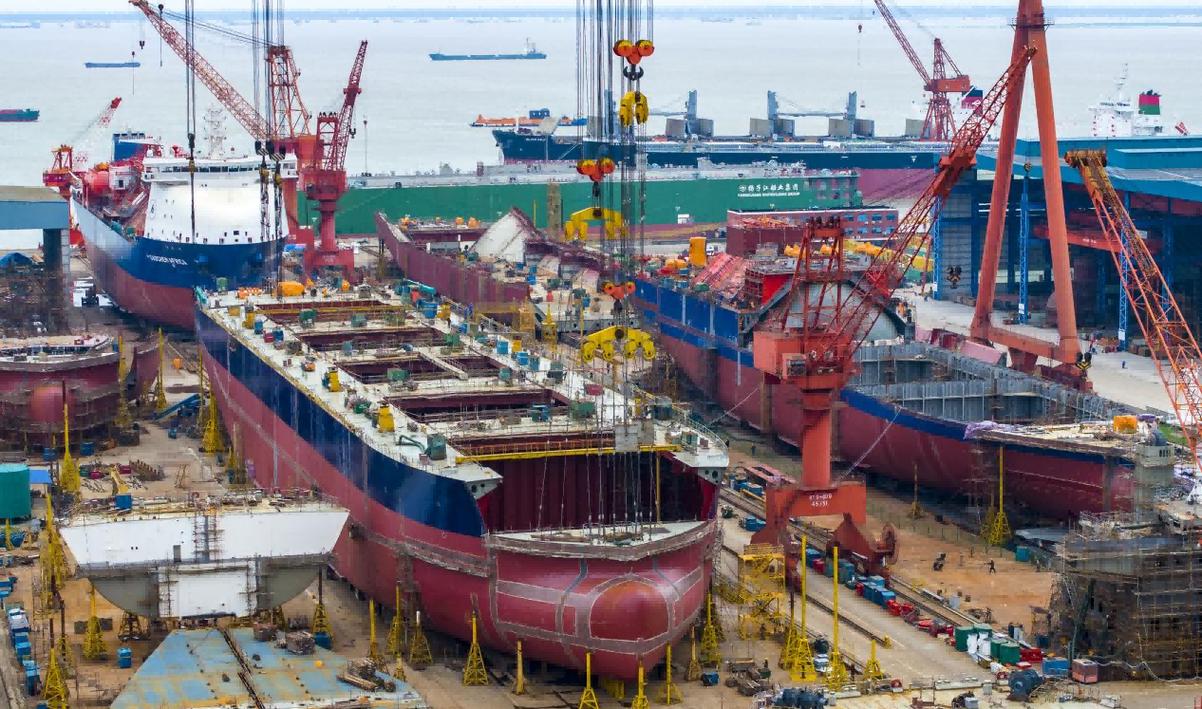
1. Which size segment fits your trading pattern?
A bulk carrier newbuild from China is rarely a one-size-fits-all decision. The three segments that drive most private-yard enquiries are handysize (28,000–40,000 DWT), supramax (50,000–65,000 DWT), and panamax (75,000–85,000 DWT). Each has a different cargo mix, a different route profile, and a different cost line.
Handysize bulk carrier newbuild. The handysize is the workhorse of regional trades — grains, fertilizers, minor ores, steels, project cargoes. A typical 38,000 DWT handysize bulk carrier newbuild at a private Chinese yard in 2026 is built with five cargo holds, geared cranes (typically four × 30-tonne), and a service speed around 14–14.5 knots. The gear makes the vessel flexible in ports without shore equipment, which is exactly where most handysize cargo originates.
Supramax bulk carrier newbuild. The supramax sits at the sweet spot for many owners in 2026. A 56,000–64,000 DWT supramax bulk carrier newbuild from China is usually fitted with four or five holds, optional gear or gearless cranes, and is designed for ocean-going grain and ore trades with port-pair flexibility. Fuel consumption at service speed is the headline figure on most owner spreadsheets, and the latest Chinese newbuilds offer scrubber-ready or methanol-ready engine rooms as standard.
Panamax bulk carrier newbuild. A panamax bulk carrier newbuild from China is a heavier investment and typically ordered by owners with long-term charter cover in mind. A 82,000 DWT panamax bulk carrier newbuild at a private yard focuses on coal, iron ore, and grain routes where the vessel locks into a tighter rotation. Crane fit-out is more often optional, since panamax ports usually have shore-based loaders.
The segment you choose should follow the trade, not the brochure. A common mistake is to order a supramax when the cargo base is genuinely handysize, leaving the vessel oversized for half its port calls.
2. What drives the price of a bulk carrier newbuild from China in 2026?
A bulk carrier newbuild price from China in 2026 sits in a wide band. The headline number depends on five inputs:
Deadweight and structural rule. A standard handysize bulk carrier newbuild at a private Chinese yard in 2026 typically lands in the USD 28–34 million range. A supramax bulk carrier newbuild sits in the USD 36–46 million band, depending on specification. A panamax newbuild from China is generally USD 50–60 million for a clean-spec hull, with scrubber or dual-fuel packages adding meaningfully to the figure.
Steel and copper content. Both commodities have been volatile. A meaningful proportion of any bulk carrier newbuild contract should allow for steel-price adjustment clauses — without them, the yard carries the risk and quietly adds it to the quoted price.
Main engine and emissions package. Tier II versus Tier III main engine selection, scrubber versus selective catalytic reduction, fuel-flex or methanol-ready engine rooms, shaft generator versus auxiliary gensets — every switch on the machinery list moves the price by hundreds of thousands of dollars.
Cargo gear. Geared cranes on a handysize or supramax can add USD 1.5–3 million to the total. They are worth it on most regional trades, but the owner has to be sure the cranes will actually be used.
Classification society and flag. A bulk carrier newbuild from China ordered to RINA, Lloyd's Register, Bureau Veritas, DNV or ClassNK carries broadly similar cost in 2026, but the flag selection has implications for manning, survey windows and port-state control exposure.
The lower number in a tender is rarely the cheapest ship. The figure that decides the outcome of a bulk carrier newbuild from China is the one nobody prints on the first page: the probability that the vessel arrives on time, to class, and without a claims file that outlives the warranty.
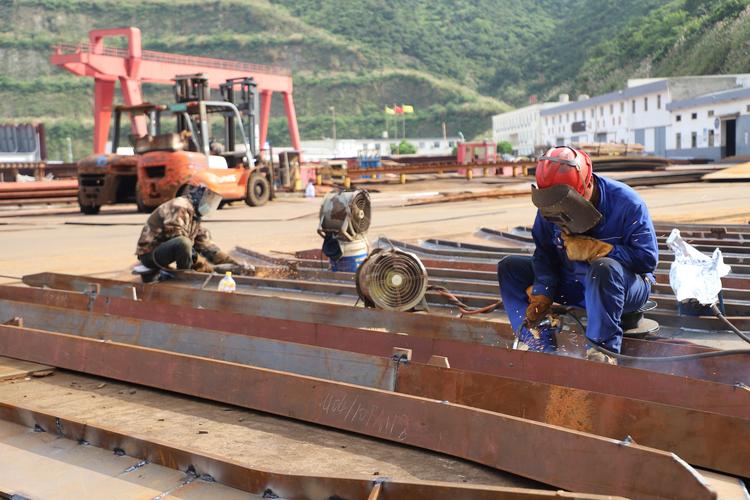
3. Realistic lead times at a private Chinese yard in 2026
Delivery windows for a bulk carrier newbuild from China in 2026 are tighter than they were two years ago, because berth slots at the largest yards are committed years ahead. Private yards with a disciplined order book are filling slots 12–18 months in advance. For a handysize or supramax bulk carrier newbuild at a well-run private yard, a buyer signing in Q1 2026 should plan for delivery in Q3 2027 to Q2 2028, depending on the specification.
Three things compress that window:
A clean, owner-approved specification at signing. Late changes during build are the single biggest reason newbuilds run late.
A single yard that controls structural design, outfitting engineering and class interface under one roof.
A workforce with low welder turnover. A yard that invests in training and welfare holds its schedule; a yard that doesn't, doesn't.
A serious due-diligence visit takes one or two days. Walk the quay, look at vessels alongside being commissioned, blocks at different stages of outfitting, and a trials team preparing for sea acceptance. That tells an experienced visitor more about a yard's maturity than any certificate on the wall.
4. What to verify before signing a bulk carrier newbuild contract in China
A buyer should treat a bulk carrier newbuild from China as a project, not a purchase. The following checklist is the same one experienced owners run through before they wire the first instalment.
Order book. What is on the floor right now, for whom, and to which class? A yard building a repeat series for an established owner has already had its drawings, procedures and work packages tested by that owner's site team.
Production system. Are plates tagged at intake? Is there crane coverage over the main assembly lines? Are robotic welding cells in use, and are they integrated with non-destructive testing?
Quality evidence. Weld procedure specifications, welder qualification records, material certificates, non-destructive testing results and dimensional survey data must exist, be retrievable, and be tied to a specific plate and a specific joint. Modern yards hold this in a single digital environment that a classification society can review before visiting.
Project team. Who is the project manager, and does that person stay with the project from contract to delivery? What proportion of the design work is done in-house?
After-sales support. Warranty response, spare-parts coordination, technical support during the first dry-docking and assistance with class renewal all affect the true cost of owning the vessel.
A useful last test is the variation log. A recent variation log is among the most honest documents a yard can share. It reveals how quickly technical questions were answered, whether cost and schedule impacts were stated up front, and how much of the final contract sum was added after signing.
5. Why a private Chinese yard is often the right answer for handysize and supramax
The largest yards in China are excellent at the largest hulls. For mid-size bulk carrier newbuild orders — handysize, supramax, smaller panamax — a private yard with the right equipment, the right classification relationships and the right production discipline is often the more practical answer.
A private yard building a bulk carrier newbuild in 2026 typically offers:
Shorter communication lines between the buyer's technical team and the yard's engineering office.
More flexibility on specification changes during the early design phase.
Direct access to the production team during the build.
A genuine partnership on after-sales, retrofit and class renewal work.
Pricing that reflects mid-size economies, not the overhead structure of a yard optimised for VLCCs or ultra-large container vessels.
This is the segment in which Taizhou Changlong Shipbuilding Industry Co., Ltd. — a private yard in Wenling, Zhejiang, building bulk carriers, fishing vessels, container ships and engineering vessels — has built a meaningful order book. For owners looking for a bulk carrier newbuild from China in 2026 with a yard that will pick up the phone after delivery, the private-yard route deserves a serious look.
Quick reference: bulk carrier newbuild from China in 2026
Segment | Typical DWT | Indicative price band (USD) | Typical delivery from signing |
Handysize bulk carrier newbuild | 28,000–40,000 | 28–34 m | 16–22 months |
Supramax bulk carrier newbuild | 50,000–65,000 | 36–46 m | 18–24 months |
Panamax bulk carrier newbuild | 75,000–85,000 | 50–60 m | 20–28 months |
Price bands reflect clean-spec hulls at private Chinese yards in 2026, excluding financing, supervision and owner-supplied items. Add scrubber, Tier III main engine or methanol-ready packages as required.
Talk to a builder, not a broker
If you are evaluating a bulk carrier newbuild from China for 2026 or 2027 delivery, Taizhou Changlong Shipbuilding Industry Co., Ltd. is open for technical visits and commercial discussions. The yard works directly with owners, charterers and class representatives, and quotes on a hull-by-hull basis.
Contact Information
Company: Taizhou Changlong Shipbuilding Industry Co., Ltd.
Address: Tianxi Center, Songmen Town, Wenling City, Taizhou, Zhejiang Province, China
中文地址: 浙江省台州市温岭市松门镇天玺中心
E-mail: taosan171@gmail.com
Phone: +86 13736657777 / +86 13676683567


关注微信公众号
